Creating a relaxing home workspace is essential for anyone who spends significant time working from home. A well-designed environment can help boost your productivity and make your workday more comfortable and enjoyable. Whether you have a dedicated room or just a small corner, these tips will help you transform your space into a calming, efficient area to get things done.
Why a Relaxing Workspace Matters
A cluttered or uncomfortable workspace can increase stress and decrease your ability to focus. On the other hand, a peaceful and well-organized space supports concentration and creativity. When you feel comfortable and relaxed, your brain can work more effectively.
Choosing the Right Location
Natural Light is Key
Select a spot with plenty of natural light if possible. Sunlight helps regulate your body’s internal clock, improves mood, and reduces eye strain. Position your desk near a window, but avoid glare on your screen.
Quiet and Minimal Distractions
Find a quiet corner away from high-traffic areas in your home. If noise is unavoidable, consider using noise-cancelling headphones or sound machines that play calming sounds.
Ergonomic Setup for Comfort
Invest in a Good Chair
Choose a chair that supports good posture. Adjustable chairs that provide lumbar support will reduce back pain and help you sit comfortably for longer periods.
Desk Height and Screen Position
Your desk should allow your elbows to rest at about a 90-degree angle. Position your monitor so the top of the screen is at eye level to prevent neck strain.
Accessories to Enhance Comfort
Use a footrest if your feet don’t reach the floor comfortably. Consider a wrist rest for your keyboard and mouse to avoid strain.
Declutter and Organize
Keep Only Essentials on Your Desk
Limit your desk to essential items only. This reduces distractions and creates a clean, calming environment.
Use Storage Solutions
Drawers, shelves, and organizers help keep paperwork and supplies neatly stored. Label storage containers to find things quickly.
Manage Cables Neatly
Loose cables create visual clutter. Use cable organizers or clips to keep cords tidy and out of sight.
Personalize Your Workspace
Add Greenery
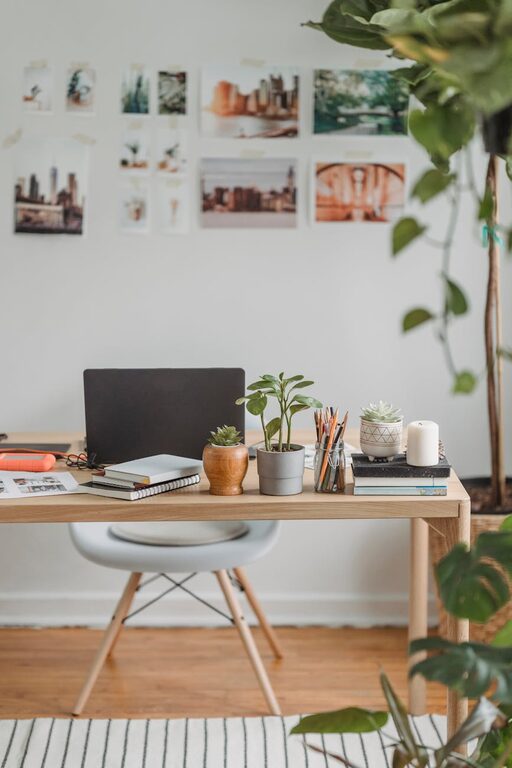
Plants improve air quality and add a touch of nature, which can reduce stress and increase creativity. Choose low-maintenance plants like succulents or snake plants.
Decorate with Meaningful Items
Include photos, artwork, or objects that bring you joy and inspiration without overcrowding your space.
Use Soothing Colors
Paint or decorate your workspace with calming colors like soft blues, greens, or neutral tones to create a relaxing vibe.
Lighting Tips Beyond Natural Light
Use Adjustable Desk Lamps
For cloudy days or evening work, use lamps with adjustable brightness and color temperature. Warmer light tones reduce eye fatigue.
Avoid Harsh Overhead Lighting
Harsh lighting can cause headaches and discomfort. Combine indirect overhead light with task lighting to create a balanced setup.
Maintain Good Air Quality
Ventilate Regularly
Open windows when possible to let in fresh air and reduce stuffiness.
Use Air Purifiers
If your home tends to be dusty or you have allergies, an air purifier can improve comfort and concentration.
Establish Daily Habits for a Relaxing Workspace
Start and End the Day by Tidying
Spend a few minutes at the beginning and end of your workday organizing your space. Starting with a clean desk helps focus, and cleaning up afterward prepares you for the next day.
Take Breaks in a Different Space
Step away from your workspace during breaks to clear your mind. A change of scenery helps reduce stress and refreshes your focus.
Incorporate Relaxing Sounds
Soft music, nature sounds, or white noise can help mask distractions and create a calm environment.
Conclusion
A relaxing home workspace is a blend of comfort, organization, and personalization. Small changes like adjusting lighting, investing in ergonomic furniture, and incorporating calming colors can make a big difference in how productive and comfortable you feel. By creating a space tailored to your needs, you’ll not only enhance your work performance but also enjoy your time spent at home more. Take time to set up your area thoughtfully and reap the benefits every day.